Calculate ELSS Tax Saving: Maximize ₹1.5 Lakhs Under Section 80C.

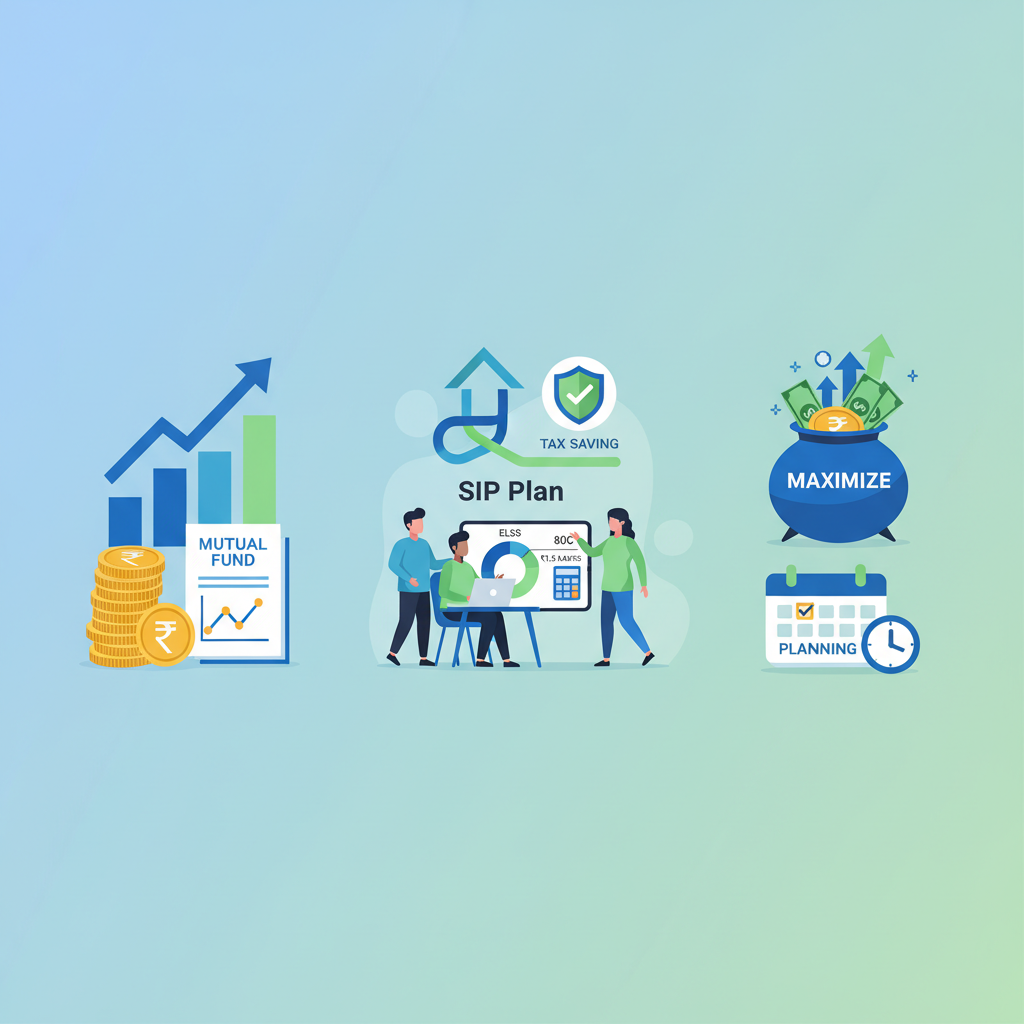
Alright, let's talk about that annual scramble, shall we? You know the one. It's February, maybe even March, and suddenly your HR department sends out that gentle (read: terrifying) reminder about submitting your Section 80C investment proofs. Panic sets in. You're trying to figure out where to park that hard-earned money to save some tax, and you often end up just dumping it into the safest, most familiar option, even if it's not the smartest long-term move.
Take Priya, for instance. She’s an IT professional in Pune, pulls in about ₹65,000 a month. Every year, she used to just top up her PPF or buy a small insurance policy to hit that ₹1.5 lakh Section 80C limit. Good for tax saving, sure, but was it really building her wealth? Not as efficiently as it could have. This is where understanding how to calculate ELSS tax saving and truly maximize that ₹1.5 lakhs under Section 80C comes into play.
It’s not just about saving tax; it’s about investing smart. And honestly, most advisors won't tell you this bluntly enough: simply fulfilling your 80C quota with any old instrument isn't optimizing your financial future. You need a strategy, especially with something as powerful as an ELSS.
ELSS: More Than Just a Tax Saver – It's a Wealth Builder
So, what exactly is an ELSS? It stands for Equity Linked Savings Scheme. In simple terms, it's a type of mutual fund that primarily invests in the stock market – think a mix of large, mid, and sometimes even small-cap companies, similar to how a flexi-cap fund operates. The big differentiator? Every rupee you invest in an ELSS fund qualifies for a tax deduction under Section 80C, up to that ₹1.5 lakh annual limit.
But here’s the kicker, and why I’ve seen it work so well for busy professionals like you: unlike other 80C options like PPF (15-year lock-in) or tax-saving FDs (5-year lock-in), ELSS comes with the shortest lock-in period of just 3 years. This three-year window, in my experience, is a sweet spot. It's long enough to allow your money to ride out short-term market volatility and tap into the potential of equity growth, but short enough that your funds aren't tied up forever. It forces a bit of disciplined investing, which is something most of us struggle with.
It’s not just about the tax deduction; it’s about the wealth creation potential. While PPF offers assured returns, they often just about beat inflation. Equity, historically, has shown the potential to deliver inflation-beating returns over the long term. Of course, past performance is not indicative of future results, and mutual funds are subject to market risks, but understanding the asset class you're investing in is key.
Your ELSS Tax Saving Calculation: Putting Numbers to the Benefit
Let's get practical. How much tax can you actually save by investing in ELSS? It's straightforward: whatever amount you invest in ELSS (up to ₹1.5 lakh) gets subtracted from your gross taxable income. The actual cash saving depends on your tax slab.
Let’s go back to Priya from Pune, earning ₹65,000/month, which is ₹7.8 lakh annually. Let's assume she falls under the old tax regime. If she invests the full ₹1.5 lakh in ELSS (and maybe some EPF, etc.), her taxable income drops from ₹7.8 lakh to ₹6.3 lakh. For someone in the 20% tax bracket (income between ₹5 lakh and ₹10 lakh), this means saving a cool 20% of ₹1.5 lakh, which is ₹30,000! That's a significant chunk of change that stays in her pocket instead of going to the taxman.
Now consider Vikram, a software engineer in Bengaluru, pulling in ₹1.2 lakh a month (₹14.4 lakh annually). He's in the 30% tax bracket. If he fully utilizes the ₹1.5 lakh 80C limit with ELSS, he saves ₹45,000 in taxes. Think about it – ₹45,000! That's like an extra month's worth of EMI for a new gadget or a mini-vacation. This direct impact on your take-home pay is what makes ELSS tax saving calculation so exciting for salaried professionals.
It’s not magic; it’s just smart tax planning combined with intelligent investing. The key is to start early and spread out your investments.
Why ELSS Often Outshines Other 80C Options for Growth
This is where my 8+ years of advising people comes in handy. I've seen countless individuals choose the 'safe' options like PPF, NSCs, or tax-saving FDs for their 80C. And yes, they serve a purpose, especially for those who are extremely risk-averse or need capital protection.
However, if your goal is not just tax saving but also meaningful wealth creation, ELSS often has an edge. Why? Because it invests in equities. Over the long term (think 5, 7, 10+ years), equities have historically proven to be one of the best asset classes to beat inflation and grow wealth. While the SENSEX or Nifty 50 might see ups and downs year-on-year, the long-term trend has been upward. Past performance is not indicative of future results, but the underlying principle of compounding and economic growth driving companies remains strong.
Here’s what I’ve seen work for busy professionals: they start an ELSS SIP alongside their other 80C contributions. The 3-year lock-in actually becomes an advantage, preventing impulsive withdrawals during market dips. It forces you to remain invested, which is crucial for equity investments to work their magic. While a PPF gives you a fixed return (currently 7.1%), ELSS has the potential for much higher returns, albeit with market risk.
Consider Anita from Hyderabad. She started investing ₹10,000 every month in an ELSS fund via SIP five years ago. She initially just wanted to save tax, but now, not only has she saved a significant amount in taxes each year, her investment has also grown substantially, potentially outpacing traditional debt instruments. That’s the power of disciplined equity investing combined with tax benefits!
The Smart Way to Invest: SIPs and Fund Selection for Maximizing ELSS Benefits
So, you’re convinced about ELSS. Great! But how do you actually go about investing in it? My biggest piece of advice, hands down, is to use a Systematic Investment Plan (SIP). Forget the last-minute lump sum scramble in March. A SIP allows you to invest a fixed amount regularly (monthly, quarterly, etc.), helping you average out your purchase cost over time. This is called rupee-cost averaging, and it's brilliant for reducing risk in volatile markets.
Imagine the market is down; your fixed SIP amount buys more units. When the market is up, it buys fewer. Over time, your average cost per unit tends to be lower. It's a simple, powerful strategy, especially for the disciplined approach needed for maximizing 80C with ELSS. You can even plan your SIPs to align with your financial goals using a tool like a SIP calculator to see how your money could grow.
When it comes to fund selection, don't get bogged down trying to find 'the best' ELSS fund. There's no single best fund forever. Instead, look for:
- Consistent Performance: Not just top returns in one year, but good, consistent performance over 3, 5, and 7 years compared to its peers.
- Experienced Fund Management: A fund house with a good track record and experienced fund managers.
- Diversification: Most ELSS funds are well-diversified across sectors and market caps. Understand their investment philosophy.
- Expense Ratio: While not the only factor, a reasonable expense ratio is always good.
You can find plenty of information on various ELSS funds, including their historical performance and expense ratios, on the AMFI website. Remember, diversification is key. You don't have to put your entire ₹1.5 lakh into one ELSS fund; consider spreading it across two good ones if you prefer, or combine ELSS with other 80C options if you already have some.
Common Mistakes Busy Professionals Make with ELSS
After years of guiding people through their financial journeys, I've seen some recurring blunders when it comes to ELSS:
-
The March Madness Scramble
This is probably the biggest one. Waiting until the last minute of the financial year to invest the entire ₹1.5 lakh in a lump sum. This not only puts pressure on your monthly budget but also exposes your entire investment to market highs or lows at a single point. A SIP approach totally avoids this.
-
Not Understanding the Lock-in Properly
While the 3-year lock-in is a blessing, some folks forget it means 3 years from the date of *each* investment. If you do a SIP, each monthly SIP instalment is locked in for 3 years from its respective investment date. So, your first SIP in April 2023 will be free for redemption in April 2026, while your SIP in March 2024 will be free in March 2027.
-
Chasing Hot Funds
Seeing an ELSS fund that gave 40% returns last year and dumping all your money into it. Past performance is not indicative of future results is a critical disclaimer for a reason. Good funds are consistent performers, not necessarily the flashiest ones for a single year.
-
Ignoring Your Overall Asset Allocation
ELSS is an equity fund. While great for growth, it should fit into your overall financial plan. If you're too equity-heavy, maybe balance it with some debt mutual funds or other instruments outside of 80C. Don’t let tax saving dictate your entire investment strategy.
-
Not Reviewing Your Investments
Set it and forget it, right? Not entirely. While ELSS has a lock-in, it doesn't mean you should never look at it. Review your fund's performance annually (after the lock-in period, of course) to ensure it's still performing well relative to its peers and your goals. No need to tinker constantly, but a periodic check-up is healthy.
Avoiding these common pitfalls can significantly enhance your experience with ELSS and truly help you maximize your 80C benefits while building genuine wealth.
Ultimately, ELSS is a fantastic tool in your financial arsenal if used wisely. It allows you to save substantial tax while also participating in the equity growth story of India. Don't just save tax; invest for your future with purpose and strategy. Start early, invest regularly, and let the power of compounding and equity growth work for you.
Why not take a moment to understand how a consistent investment can grow? Check out a step-up SIP calculator to see how increasing your SIP amount annually can supercharge your wealth creation journey!
Mutual Fund investments are subject to market risks, read all scheme related documents carefully.