Decoding Mutual Fund Returns: Large Cap vs Mid Cap Performance Analysis

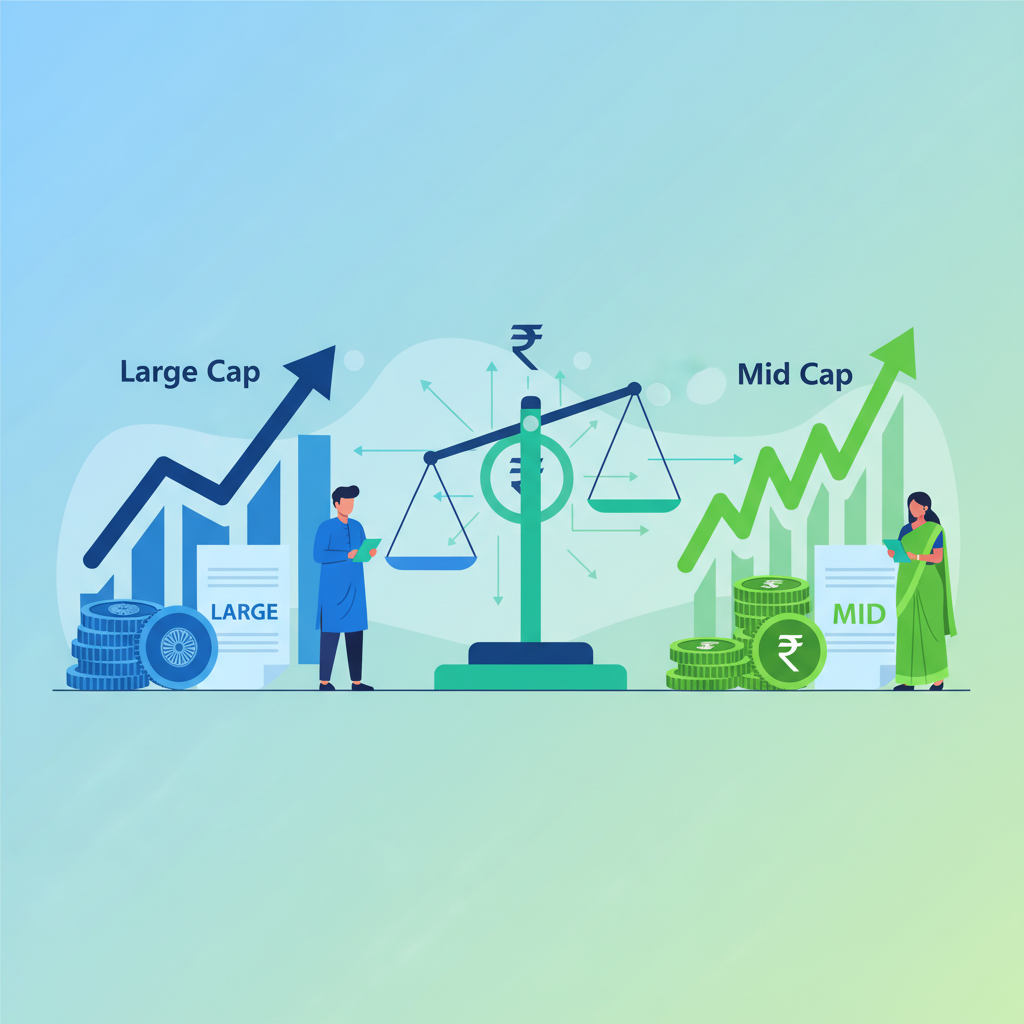
Ever felt that pang of confusion when scrolling through financial news, seeing headlines shout about market rallies and then dip a few days later? One day, it's 'Mid-caps on fire!', the next, 'Large-caps show resilience!' And you're just sitting there, like Priya from Pune, a salaried professional earning ₹65,000 a month, trying to figure out where her hard-earned SIP money should go. You want to make smart choices, but the jargon and conflicting narratives about Decoding Mutual Fund Returns: Large Cap vs Mid Cap Performance Analysis can be a real headache, right?
It’s a classic dilemma for many Indian investors. Should you chase the potentially higher, but also riskier, growth of mid-cap funds, or stick to the stability of large-cap funds? There’s no single ‘right’ answer, but after 8+ years of advising folks just like you, I can tell you there’s a smart way to approach this. Let's peel back the layers and understand what truly drives their performance, and how it impacts your financial goals.
The Tale of Two Titans: Large Cap vs Mid Cap Mutual Funds - What's the Real Difference?
First things first, let's get our definitions straight, no fancy finance speak, promise. Think of the Indian stock market like a cricket team. The 'Large Cap' companies are your Virat Kohlis and Rohit Sharmas – the established, consistent performers. These are typically the top 100 companies by market capitalization, as defined by SEBI. We're talking about giants like Reliance Industries, TCS, HDFC Bank – household names that are usually stable, well-researched, and often leaders in their respective industries.
Then you have the 'Mid Cap' companies. These are like the up-and-coming players, perhaps the next generation of superstars. They are the companies ranked from 101st to 250th by market capitalization. They're past the 'start-up' phase, have proven business models, but still have significant room to grow and expand. Think of companies that aren't quite the biggest but are definitely making waves and have strong growth trajectories.
So, why does this distinction matter for your mutual fund returns? Because their inherent characteristics dictate their behavior in different market cycles. It's like comparing a marathon runner (large cap) to a sprinter (mid cap) – both are athletes, but their strengths lie in different areas.
Understanding Large Cap Funds: The Steady Eddies of Your Portfolio
When you invest in a large cap mutual fund, you're essentially betting on stability, established leadership, and consistent, albeit often slower, growth. These funds primarily invest in those top 100 companies. Why are they considered stable?
- Established Businesses: They have robust business models, strong brand recognition, and often a dominant market share. Think of how difficult it would be to dislodge a company like Asian Paints or Britannia from their positions.
- Lower Volatility: Because of their size and market presence, large cap stocks tend to be less volatile than their mid or small cap counterparts. When the market sneezes, large caps usually catch a cold, not pneumonia. This doesn't mean they don't fall, but their drops are often less severe and they tend to recover faster.
- Easier to Track: Their performance is often closely tied to benchmark indices like the Nifty 50 or SENSEX. This makes it easier to understand their underlying movements.
For someone like Rahul from Bengaluru, a 35-year-old software engineer earning ₹1.2 lakh a month, who has a home loan and wants to build a solid corpus for his child's education in 15 years, a significant allocation to large cap funds makes a lot of sense. He needs reliability, a core foundation that won't give him sleepless nights. Large cap funds provide that ballast, aiming for steady capital appreciation over the long term, without the wild swings.
However, don't expect them to double your money overnight. Their growth is often more measured. They're not designed for explosive returns, but for dependable, long-term wealth creation. Think of them as the anchors in your financial ship.
Navigating Mid Cap Volatility: The Growth Engines with a Kick
Now, let's talk about mid cap funds. These are where the excitement often lies! Mid cap companies are often in a sweet spot: they've survived the initial struggles of being small, have established themselves, but still have immense potential for expansion, innovation, and market share capture. This is where you find tomorrow's large caps.
- Higher Growth Potential: Many mid cap companies are agile and can grow faster than their larger, more entrenched competitors. They can quickly adapt to new trends, expand into new markets, or launch innovative products.
- Potential for Multi-bagger Returns: This is what draws many investors. A mid cap stock, if it performs exceptionally well and grows significantly, can eventually become a large cap, delivering substantial returns along the way.
- Higher Volatility and Risk: The flip side? They are significantly riskier. When markets are bullish, mid caps can soar, outperforming large caps by a wide margin. But when markets turn bearish or there's economic uncertainty, mid caps can fall sharply, sometimes even more than large caps. Their business models might be less diversified, making them more vulnerable to specific industry downturns.
Consider Anita from Hyderabad, a 28-year-old marketing professional, earning ₹75,000/month, single, and with a higher risk appetite. She's looking to build wealth aggressively over the next 10-12 years for an entrepreneurial venture. For her, a higher allocation to mid cap funds, perhaps alongside some balanced advantage funds, could align well with her aggressive growth objective, provided she's comfortable with the inherent market fluctuations. She understands that the path might be bumpy, but the potential rewards are higher.
The Performance Jigsaw: Large Cap vs Mid Cap Returns – A Historical Peek
This is where things get interesting, and often, misleading if you don't look beyond the headlines. Historically, both large cap and mid cap funds have had periods of outperformance. There's no clear winner across all timeframes.
Here’s what I’ve seen work for busy professionals over the years: During strong bull runs, especially those driven by broader economic growth and liquidity, mid caps tend to significantly outperform large caps. Their smaller base allows for percentage-wise higher growth. Think of the 2014-2017 period or even some parts of the post-COVID rally. However, when the market gets nervous, fears of recession creep in, or global events cause instability, investors tend to flock to the safety of large caps. They become the defensive play, preserving capital better than their mid-cap peers.
Please remember: Past performance is not indicative of future results. Just because mid-caps did great last year doesn't mean they will this year. It's a cyclical dance.
Honestly, most advisors won't tell you this bluntly, but chasing the 'hot' category is one of the biggest mistakes. The category that performed best last year might lag this year. A truly diversified portfolio often includes a judicious mix of both. This is also why categories like flexi-cap funds or multi-cap funds have gained popularity, as they give fund managers the flexibility to shift between large, mid, and small caps based on market conditions, aiming to capture growth while managing risk.
Common Mistakes Salaried Professionals Make When Choosing Between Large Cap and Mid Cap
After nearly a decade in this field, I've seen patterns in what investors, even smart ones like Vikram from Chennai (earning ₹90,000/month), often get wrong:
- Chasing Last Year's Winner: This is probably the biggest culprit. A fund or category shows stellar returns for a year or two, and everyone piles in, only to see it underperform next. The market often works on a 'mean reversion' principle – what goes up excessively often comes down, and vice versa.
- Ignoring Their Own Risk Tolerance: Just because your friend is investing heavily in mid-caps doesn't mean it's right for you. Your risk appetite, financial goals, and time horizon are unique. Someone with a 5-year goal cannot take the same risks as someone with a 20-year goal.
- Lack of Diversification: Putting all your eggs in one basket, whether it's solely large-cap for 'safety' or solely mid-cap for 'growth', can be detrimental. A balanced portfolio is key.
- Short-Term Thinking for Long-Term Goals: Mutual funds, especially equity-oriented ones, are built for the long haul. Expecting significant, consistent returns in 1-2 years is unrealistic and often leads to panic selling at the wrong time.
- Not Reviewing Periodically: Markets change, company performances evolve, and your own financial situation changes. Your portfolio needs a periodic review, maybe once a year, to ensure it still aligns with your goals. AMFI's data on fund categories is a great resource to understand the market better, but remember to look at the longer term.
The trick isn't to pick one and stick with it forever. The trick is to understand their roles and how they fit into your overall financial plan.
FAQs on Large Cap vs Mid Cap Performance Analysis
1. What's a good allocation between large cap and mid cap funds for my portfolio?
There's no one-size-fits-all answer, but a common thumb rule depends on your age and risk appetite. Younger investors (20s-30s) with a long time horizon and higher risk tolerance might have a higher mid-cap allocation (e.g., 40-50% mid-cap, 50-60% large-cap, or even some small-cap). As you get older or your goals get closer, you might lean more towards large-caps for stability (e.g., 70-80% large-cap). A good financial advisor can help you tailor this based on your specific situation. Many investors also consider a flexi-cap fund, which automatically manages this allocation for you.
2. Are mid cap funds riskier than large cap funds?
Yes, generally speaking, mid cap funds are considered riskier and more volatile than large cap funds. Their companies are often less established, have smaller market capitalizations, and can be more susceptible to economic downturns or sector-specific challenges. While they offer higher growth potential, they also come with a greater potential for significant drawdowns during market corrections.
3. When should I invest in large cap vs mid cap funds?
It's not about 'when' to invest in one versus the other, but rather about building a diversified portfolio that includes both for the long term. Large caps provide stability and core growth, while mid-caps offer higher growth potential. Your investment horizon and risk tolerance should guide your allocation strategy. For long-term goals (10+ years), a mix of both usually works best.
4. Can I invest only in mid-cap funds for higher returns?
While mid-cap funds have the potential for higher returns, investing solely in them comes with significant risk and high volatility. It's generally not recommended for most investors to have 100% allocation to mid-cap funds, especially if you have a moderate risk appetite or a shorter investment horizon. A balanced approach with a mix of large-cap for stability and mid-cap for growth is usually a more prudent strategy.
5. What about small-cap funds? How do they compare?
Small-cap funds invest in companies beyond the top 250 by market capitalization. They are at the extreme end of the risk-return spectrum, offering the highest growth potential but also the highest volatility and risk. While they can deliver exceptional returns, they are suitable only for investors with a very high-risk appetite and a very long investment horizon. For most salaried professionals, a combination of large and mid-caps (or multi-cap/flexi-cap) is often a more balanced approach before considering a small allocation to small-caps.
Navigating the world of mutual funds, especially when it comes to understanding how large cap and mid cap funds behave, isn't about picking a 'winner'. It's about building a portfolio that truly reflects your financial goals, your risk appetite, and your time horizon. Don't let market noise dictate your decisions. Focus on a well-thought-out strategy, consistent investments, and the power of compounding.
Ready to see how even small, consistent steps can lead to big results? Use a SIP calculator to estimate how your regular investments could grow over time. It’s a great way to visualize your financial journey and stay motivated!
Mutual Fund investments are subject to market risks, read all scheme related documents carefully. This blog post is for educational and informational purposes only and is not financial advice or a recommendation to buy or sell any specific mutual fund scheme.