ELSS Tax Saving: Maximize ₹1.5 Lakh Deduction for Salaried Indians

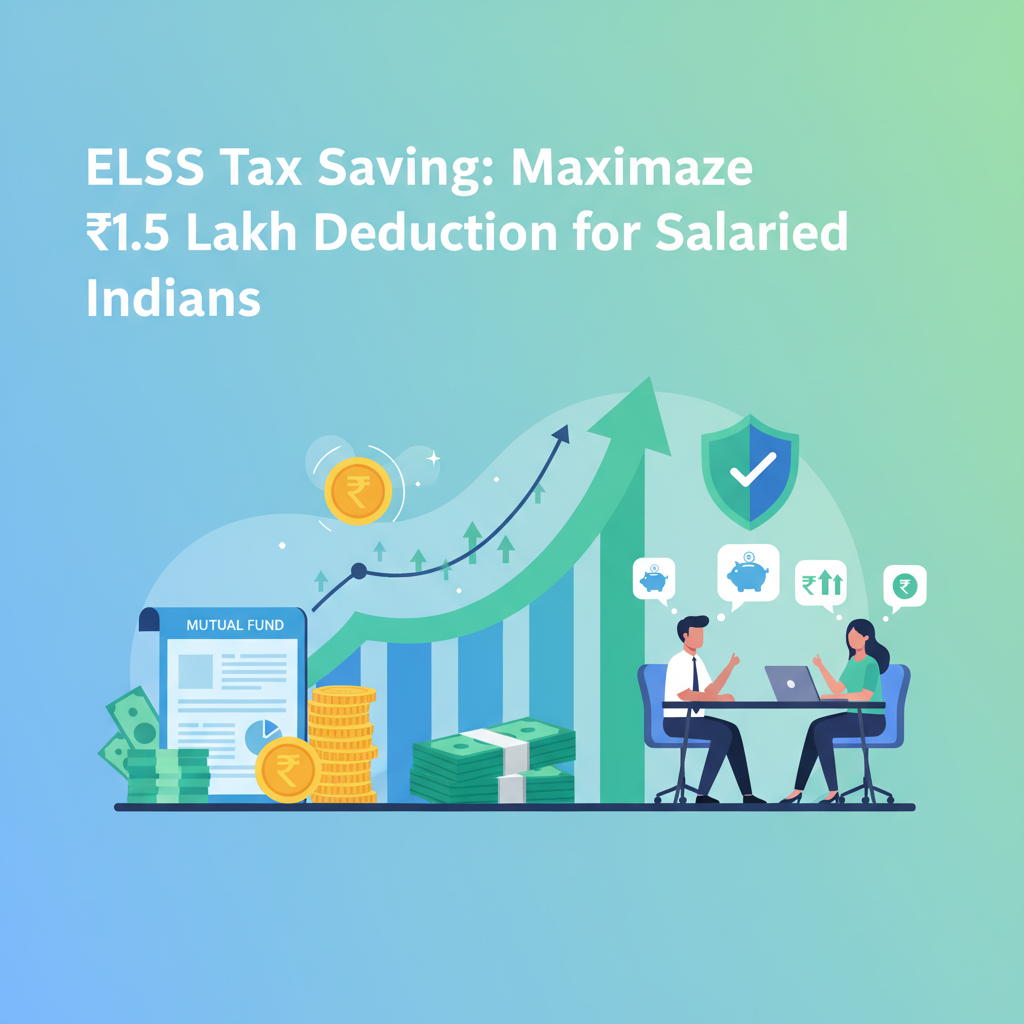
That dreaded email from HR, usually in December or January, asking for your investment proofs. Ring a bell? For most salaried folks like Priya in Pune, earning ₹65,000 a month, it's a frantic scramble to save tax under Section 80C. We all want to maximize that ₹1.5 lakh deduction, right?
But here's the kicker: simply 'saving tax' shouldn't be the end goal. What if I told you there’s a way to not just save tax but also build substantial wealth over time, all within that same Section 80C limit? That's where ELSS Tax Saving comes into play, and frankly, it's a game-changer for any Indian professional serious about their money.
As someone who's spent 8+ years helping people like you navigate the sometimes-confusing world of mutual funds, I've seen firsthand how ELSS (Equity Linked Savings Schemes) can transform a rushed tax-saving exercise into a powerful wealth-building strategy. Let’s dive in.
What Exactly is ELSS? Your Dual-Purpose ₹1.5 Lakh Deduction Tool
Think of ELSS as a mutual fund scheme that comes with a special tax perk. Like other equity mutual funds, an ELSS fund primarily invests your money in the stock market – in companies across various sectors and market caps. This equity exposure is key because historically, equities have shown the potential to beat inflation and generate significant returns over the long term, unlike many traditional fixed-income tax-saving options.
The 'savings scheme' part comes in because investments in ELSS funds qualify for a tax deduction of up to ₹1.5 lakh under Section 80C of the Income Tax Act. So, if you invest ₹1.5 lakh in an ELSS fund, your taxable income reduces by that amount. Simple, right?
But here's the crucial difference that makes ELSS stand out: it has the shortest lock-in period among all Section 80C instruments – just 3 years. Compare that to PPF (15 years), FDs (5 years), or even certain life insurance policies. This shorter lock-in gives you more liquidity while still allowing your money enough time to grow in the markets. Past performance is not indicative of future results, but the potential for growth is undeniable.
Why Smart ELSS Investing Beats Just 'Saving Tax'
Many people treat tax saving like a necessary evil, just dumping money into whatever's available in February. But with ELSS, you're not just saving tax; you're actively participating in India's growth story. Imagine your money growing alongside some of the best companies on the Nifty 50 or SENSEX, rather than sitting in a low-interest fixed deposit.
I remember advising Rahul, a software engineer in Hyderabad drawing ₹1.2 lakh a month, a few years ago. He was religiously putting his ₹1.5 lakh into an FD every year. While safe, his money was barely outpacing inflation. When he switched to ELSS, his attitude changed. He wasn't just 'saving tax'; he was investing for his future goals, like a down payment for a flat. After 5 years, the difference in his portfolio value was stark, all thanks to the power of compounding and equity growth.
Now, let's talk about tax efficiency beyond 80C. Returns from ELSS funds are subject to Long-Term Capital Gains (LTCG) tax. If your total LTCG from equity investments (including ELSS) in a financial year exceeds ₹1 lakh, the excess is taxed at 10% (without indexation). While there's a tax, the first ₹1 lakh is exempt, making it quite efficient. Honestly, most advisors won't tell you to focus on the post-tax, post-inflation returns, but that's the real metric of how much purchasing power you've actually built.
Picking the Right ELSS Fund: It's Not a Dartboard Game
Okay, so you're convinced about ELSS. Now what? You can't just pick any fund. Here’s what I've seen work for busy professionals like Anita in Bengaluru, who values a clear strategy over guesswork:
- Consistency over Flashiness: Don't just chase last year's top performer. Look for funds that have consistently delivered good returns across different market cycles (3-5 years, ideally longer).
- Fund Manager Expertise & House Reputation: A seasoned fund manager with a clear investment philosophy is crucial. The reputation and stability of the Asset Management Company (AMC) also matter. SEBI regulations ensure a level playing field, but track record speaks volumes.
- Expense Ratio: This is the annual fee charged by the fund house. While ELSS funds usually fall under the 'flexi-cap' category, meaning they can invest across large, mid, and small-cap companies, a lower expense ratio generally means more of your money is working for you.
- SIP, Not Just Lumpsum: For regular salaried individuals, investing through a Systematic Investment Plan (SIP) is usually the smarter move. It allows you to average out your purchase cost (rupee cost averaging) and reduces the risk of timing the market. Plus, it builds financial discipline. Want to see how much you could potentially build with regular SIPs? Check out a SIP calculator to estimate your potential returns.
Common ELSS Tax Saving Mistakes Salaried Indians Make
Even with the best intentions, I've noticed a few recurring slip-ups when it comes to ELSS:
- The March Rush: Waiting until February or March to invest your entire ₹1.5 lakh in one go. This often leads to poor fund selection and investing a large sum at potentially elevated market levels. Vikram, a manager in Chennai, earning ₹1.2 lakh/month, once missed out on some market dips because he waited until the last minute, locking in all his investment at a higher NAV.
- Ignoring the 3-Year Lock-in: Some invest with the mindset of quick redemption, forgetting the mandatory 3-year lock-in. While short for tax-saving instruments, it's still a commitment.
- One-and-Done Approach: Investing for tax purposes and then forgetting about it. Your ELSS portfolio, like any other investment, needs annual review. Has the fund's performance dipped consistently? Has its strategy changed?
- Over-diversification or No Diversification: Don't put your entire ₹1.5 lakh into five different ELSS funds. One or two well-chosen funds are usually sufficient. Conversely, just picking one random fund without research is equally risky.
- Chasing Past Returns Blindly: As mentioned, past performance is not indicative of future results. It’s a factor, but not the only one. Dig deeper!
The goal isn't just to get the tax deduction, it's to use that deduction as a springboard for genuine wealth creation. Think long-term, think growth, and think discipline. That's the real power of ELSS.
Frequently Asked Questions about ELSS Funds
Got more questions? Here are some common ones I get:
Q1: Is ELSS risky?
A: ELSS funds primarily invest in equities, so they are subject to market risks. This means the value of your investment can fluctuate based on market movements. However, over the long term (typically 5+ years), equity investments like ELSS have historically offered the potential for higher returns compared to fixed-income options, helping to combat inflation. It’s about understanding and managing that risk.
Q2: Can I invest in ELSS through SIP?
A: Absolutely, and in my experience, it's often the best way for salaried individuals! Investing via a Systematic Investment Plan (SIP) allows you to invest a fixed amount regularly (e.g., monthly). This not only instills financial discipline but also helps with rupee cost averaging, meaning you buy more units when the market is down and fewer when it's up, potentially lowering your average cost per unit over time. Each SIP installment will have its own 3-year lock-in from its respective investment date.
Q3: What happens after the 3-year lock-in period?
A: Once your investment completes its 3-year lock-in, you have two main options: you can redeem your units and take out your money, or you can choose to stay invested. Many investors choose to remain invested if the fund is performing well and aligns with their financial goals, allowing their money to continue growing with market exposure. The lock-in is removed, but you don't *have* to redeem.
Q4: How much tax can I save with ELSS?
A: You can claim a deduction of up to ₹1.5 lakh from your taxable income under Section 80C by investing in ELSS. The actual amount of tax you save depends on your income tax slab. For instance, if you fall in the 30% tax bracket, investing ₹1.5 lakh could potentially save you ₹45,000 in taxes (plus cess).
Q5: Are there any charges or fees associated with ELSS funds?
A: Yes, like all mutual funds, ELSS funds have an Expense Ratio, which is an annual fee charged by the fund house for managing your money. This is deducted directly from the fund's assets and is reflected in the Net Asset Value (NAV). Some funds might also have an exit load, but typically, ELSS funds do not charge an exit load *after* the 3-year lock-in period. Always check the scheme-related documents for exact details.
Don't just chase that ₹1.5 lakh deduction; make it work harder for you. ELSS isn't just a tax-saving instrument; it's a powerful tool for wealth creation if used wisely. Start early, stay disciplined, and always do your homework.
Curious about how a step-up SIP can boost your ELSS investments over time, allowing you to increase your contributions as your salary grows? Play around with a SIP Step-Up Calculator here and see the potential difference it can make!
Disclaimer: This blog post is for educational and informational purposes only and is not intended as financial advice or a recommendation to buy or sell any specific mutual fund scheme. Mutual Fund investments are subject to market risks, read all scheme related documents carefully. Past performance is not indicative of future results.