Lumpsum vs SIP for home down payment: Which is better for you?

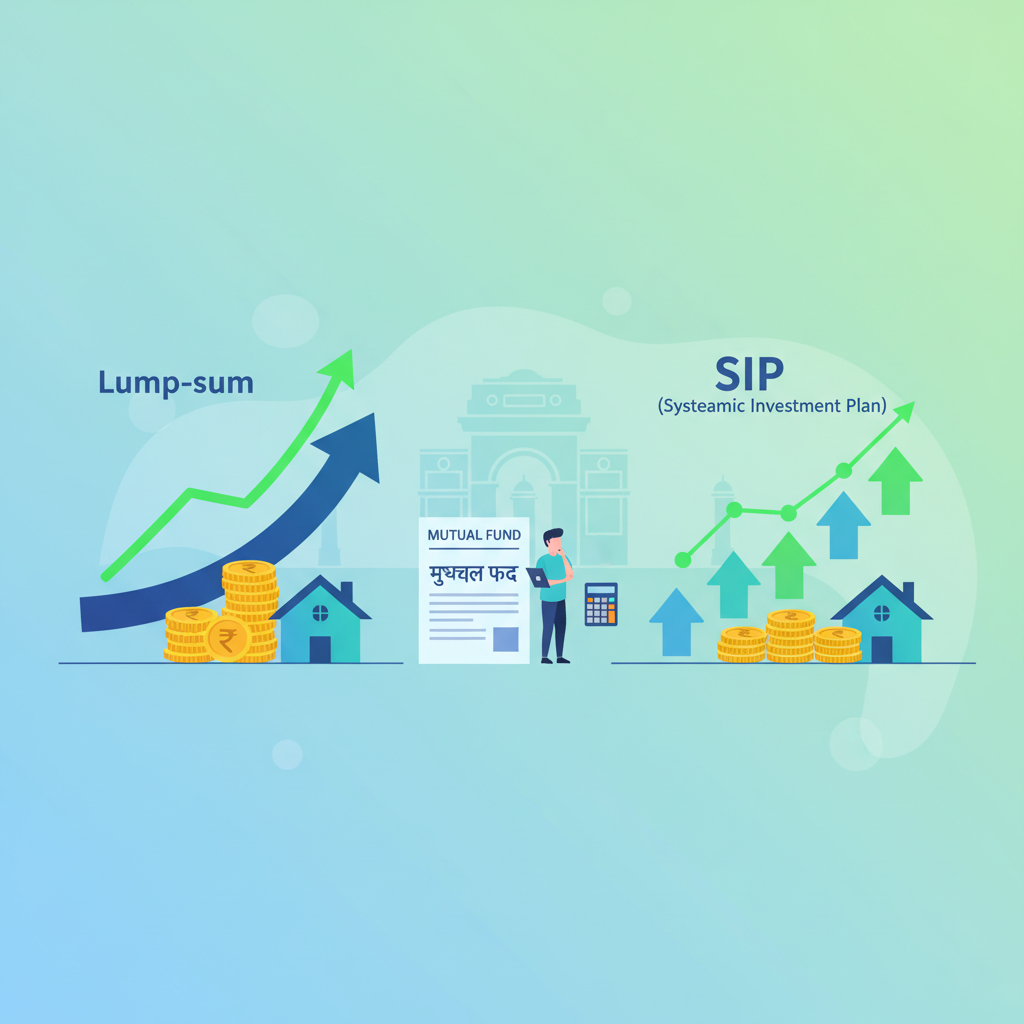
Alright, let’s talk about that dream. That feeling of walking into your own space, choosing the paint colours, building a life. For most of us salaried professionals in India, owning a home isn’t just a financial goal; it’s an emotional milestone. But before you get to the EMIs, there’s that crucial first step: the down payment. And that’s where the big question usually pops up: when saving for your home down payment, should you go with a lumpsum investment or a Systematic Investment Plan (SIP)?
Honestly, this is one of the most common dilemmas I’ve seen folks like Priya from Pune, earning around ₹65,000 a month, struggle with. She wants to save ₹15 lakhs for a down payment in 5 years, and she’s trying to figure out the smartest way to get there. Similarly, Rahul in Hyderabad, with his ₹1.2 lakh salary, is sitting on a bonus and wondering if he should just dump it all into the market or start a SIP. This isn't just about maths; it's about psychology, market realities, and your personal comfort zone. Let’s break down the lumpsum vs SIP for home down payment debate, real-world style.
The SIP Advantage: Your Steady Partner for a Home Down Payment
Picture this: You’re saving for a down payment. The market is a roller coaster – up one day, down the next. If you try to time it, you’ll probably end up tearing your hair out. This is where the SIP truly shines, especially for a goal like a home down payment that often has a mid-to-long-term horizon (say, 3 to 7 years).
The magic of SIPs lies in something called Rupee Cost Averaging. Sounds fancy, right? It just means when markets are high, your fixed SIP amount buys fewer units. When markets are low, the same amount buys more units. Over time, this averages out your purchase cost, smoothing out the bumps and reducing the risk of investing all your money at a market peak. It’s like buying groceries; you don’t wait for prices to drop to zero; you buy what you need consistently.
Think about Priya in Pune. She’s disciplined, earns a steady salary, and can commit ₹20,000 a month. Starting a SIP in a well-diversified equity fund, like a Flexi-cap or a Large & Mid-cap fund, allows her to consistently invest, regardless of what the Nifty 50 or SENSEX is doing. This systematic approach builds corpus without needing a crystal ball to predict market movements. For a goal like a down payment, which is usually a few years out, this consistent exposure to equity (which historically has delivered higher returns than traditional savings methods over the long term) can make a significant difference. Remember, past performance is not indicative of future results, but the power of compounding with regular investing is undeniable.
I’ve seen countless busy professionals like Anita, a software engineer in Bengaluru, use SIPs to effortlessly build substantial wealth for big goals. She started small, increased her SIP with every raise (a concept called step-up SIP, which is incredibly powerful!), and reached her down payment goal faster than she expected. It’s about automating your savings and letting compounding do the heavy lifting.
When a Lumpsum Can Be a Power Play (But With Caution!)
Now, let's talk about the big splash. A lumpsum investment means putting a large sum of money into a fund all at once. When does this make sense for your down payment savings?
First, consider the source. Did you just get a significant bonus, receive an inheritance, or sell an existing asset (like Rahul did with his ancestral property)? If you have a substantial amount sitting idle, investing it as a lumpsum can accelerate your goal, *provided the market conditions are right* and your risk appetite allows for it.
Historically, investing a lumpsum when the market has corrected significantly (e.g., after a major fall in the Nifty 50) can be incredibly rewarding. You’re essentially buying low. However, here’s the kicker: predicting market bottoms is notoriously difficult, even for seasoned experts. Most people who try to time the market end up losing out.
If you have a lump sum and your down payment goal is, say, 5+ years away, you *could* consider deploying it into equity mutual funds. But if your goal is closer (1-3 years), parking that entire amount in a volatile equity fund could expose your hard-earned money to significant risk right before you need it. Imagine needing that ₹15 lakhs in 18 months and the market tanks 20% in the last 6 months. That’s a nightmare you want to avoid.
Here’s what I’ve seen work for busy professionals like Vikram, a marketing manager in Chennai, who received a large severance package. He didn’t just dump it all. He put a portion into a liquid fund for immediate needs, then used a SIP Calculator to determine how much he could systematically transfer from a low-risk debt fund into equity funds over 6-12 months. This is called a Systematic Transfer Plan (STP) – a smart way to deploy a lumpsum into equity without the timing risk. It offers some of the benefits of rupee cost averaging while putting your large sum to work faster than just waiting for monthly SIPs.
The Hybrid Approach: The Smartest Path for Most
Honestly, most advisors won’t tell you this, or they'll overcomplicate it. But for the average salaried professional aiming for a home down payment, the best strategy usually isn't an either/or. It's a healthy mix.
Start with a strong SIP. This builds discipline, leverages rupee cost averaging, and ensures consistent progress towards your goal. But life throws you curveballs – bonuses, appraisals, unexpected windfalls. Don't let that extra cash sit idle in a savings account. These are prime opportunities for a strategic lumpsum top-up.
For example, Priya starts her ₹20,000/month SIP. After a year, she gets an annual bonus of ₹1 lakh. Instead of splurging it all, she could invest ₹50,000 of it as a lumpsum into her down payment fund, perhaps into a balanced advantage fund that manages equity exposure dynamically. The remaining ₹50,000 could go towards increasing her SIP amount (hello, step-up SIP!) or an emergency fund.
This hybrid strategy gives you the best of both worlds: the discipline and risk mitigation of SIPs, combined with the accelerated growth potential of lumpsum investments when opportunities or extra funds arise. It’s flexible, practical, and aligns with how most people’s finances actually work.
What Most People Get Wrong About Down Payment Investing
After years of advising folks, I've noticed a few common pitfalls when it comes to saving for a down payment:
- Underestimating the Total Cost: It's not just the down payment amount. Factor in stamp duty, registration charges, society formation costs, and brokerage. These can easily add another 10-15% on top of your down payment. You need to invest for *that* total amount.
- Putting it All in Low-Yield Options: Parking your down payment money in a savings account or even fixed deposits for a 3-5 year goal is a classic mistake. While safe, the returns often barely beat inflation, meaning your purchasing power erodes. For longer durations, a portion needs to be in equity-oriented funds for potential growth.
- Ignoring Inflation: The ₹15 lakh down payment you need today might become ₹18-20 lakhs in 5 years due to property price inflation. Your investment strategy must aim to beat this, not just match it.
- Trying to Time the Market: As discussed, trying to predict market movements for a lumpsum investment is a fool's errand. Consistency (SIP) almost always wins over attempts at market timing.
- Not Reviewing Progress: Set it and forget it? Not for a crucial goal like a home down payment. Review your portfolio at least once a year. Are you on track? Do you need to increase your SIP or make a tactical lumpsum investment?
Remember, your investment strategy should evolve as you get closer to your goal. If your down payment is just a year or two away, it makes sense to de-risk and gradually shift your equity investments into safer debt funds or ultra-short duration funds. SEBI regulations are there to protect investors, so understanding fund categories and their risks is key.
So, Which Is Better For You?
There’s no one-size-fits-all answer, but here’s my general advice:
- If you have a steady income and a longer time horizon (3+ years): Start a SIP. It’s consistent, disciplined, and leverages market volatility to your advantage. Consider a step-up SIP to accelerate your savings.
- If you have a significant lumpsum *and* a longer time horizon (5+ years): You *could* invest it as a lumpsum, but an STP (Systematic Transfer Plan) from a debt fund to equity is often a safer and smarter bet.
- If you have a lumpsum *and* a shorter time horizon (1-3 years): Prioritize capital preservation. Debt funds, liquid funds, or even FDs for a portion might be more suitable, though the returns will be lower. Consider a balanced advantage fund for some equity exposure with professional risk management.
- The winning strategy for most: A core SIP, supplemented by tactical lumpsum investments (or STPs) from bonuses or windfalls. This hybrid approach gives you flexibility and maximizes your potential.
Ultimately, saving for a home down payment requires a plan, discipline, and a bit of smart thinking. Don’t get caught up in the hype or paralysis by analysis. The most important thing is to start. Figure out your goal, your timeline, and your comfort with risk. Then, use tools to map it out.
Want to see how much you need to invest monthly to hit your down payment goal? Check out this Goal SIP Calculator. It can give you a clear picture and help you start building that dream home brick by brick, or rather, SIP by SIP.
Mutual Fund investments are subject to market risks, read all scheme related documents carefully.