Step Up SIP: How Much to Increase Annually for Child's Education?

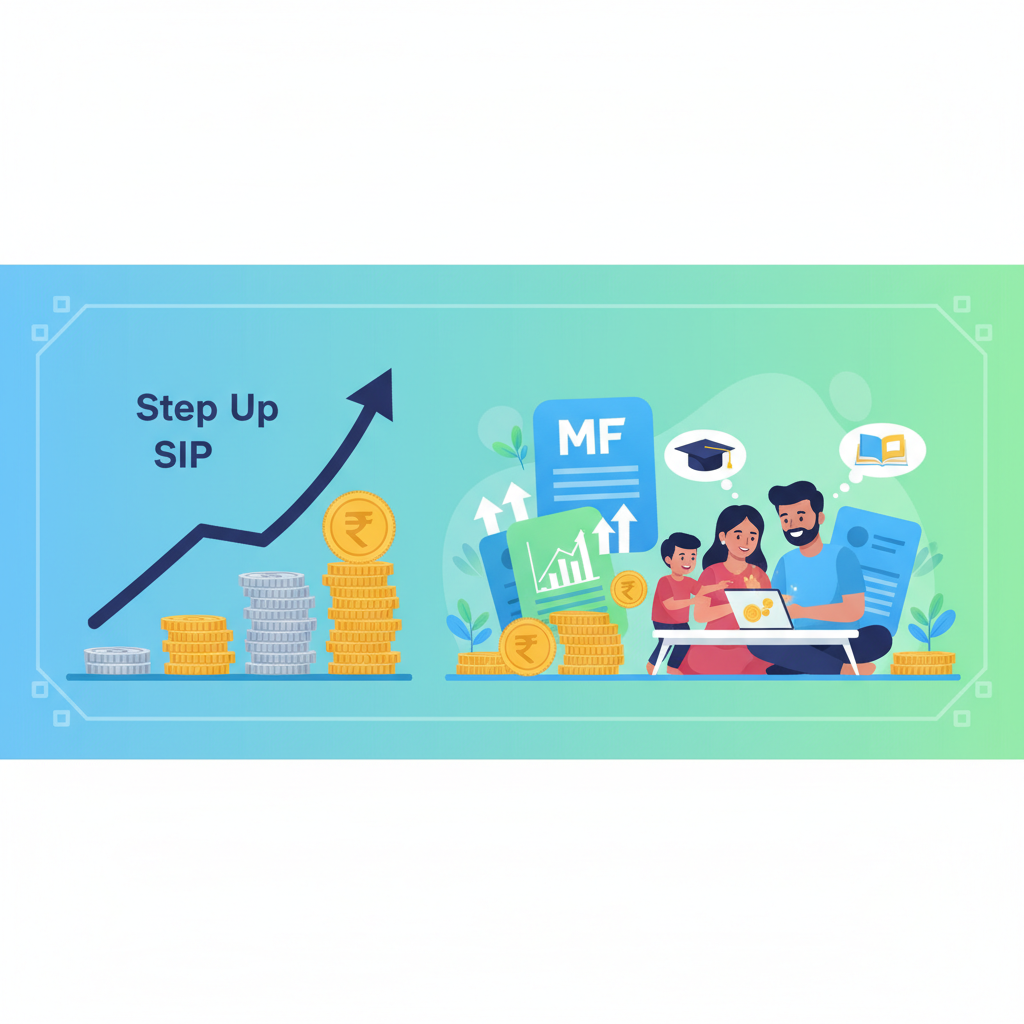
Alright, let's talk about something that keeps almost every Indian parent up at night: your child's education. The dreams are big – IIT, IIM, maybe even an Ivy League abroad. But then reality hits. You see those college fees spiralling upwards, faster than the Nifty 50 on a good day, and you wonder, 'How on earth will I afford this?'
You've probably started a SIP (Systematic Investment Plan), which is fantastic! That's step one. But here's the kicker: a static SIP, no matter how disciplined, might not be enough to outpace the beast that is education inflation. That's where a Step Up SIP comes into play. It's not just a fancy term; it's your secret weapon. But the big question I get from folks like Priya in Pune, who earns ₹65,000 a month and dreams of her daughter becoming a doctor, or Rahul in Hyderabad, pulling in ₹1.2 lakh and eyeing an MBA for his son, is always the same: How much to increase annually for child's education?
The Silent Saboteur: Education Inflation and Your Step Up SIP Strategy
Think about it. General inflation might hover around 5-7%, but education inflation? It's often in the double digits, easily 10-12% or even higher for specialized courses or international degrees. That ₹15-20 lakh engineering degree today could easily be ₹40-50 lakh in 15 years. Scary, right?
This isn't just theory; it's what I've seen firsthand over my 8+ years advising salaried professionals. I remember consulting a couple in Bengaluru whose child was just born. They started a ₹10,000 SIP for his engineering education. When we projected the cost in 18 years, even with a conservative 12% annual return, their static SIP fell short by nearly 40% of the estimated goal. The missing piece? A Step Up SIP.
A Step Up SIP, simply put, is increasing your SIP amount by a certain percentage each year. It aligns your investments with your rising income and, crucially, with the rising cost of your goal. It gives your wealth-building journey a much-needed booster shot, especially when you're tackling something as formidable as your child's higher education.
Cracking the Code: How Much Should You Step Up Your SIP Annually?
Okay, this is the million-dollar question, and honestly, most advisors won't give you a straight, simple answer because it depends. But I'll tell you what I've seen work for busy professionals like you.
Typically, a healthy annual Step Up SIP percentage ranges from 10% to 15%. Why this range? Because it often mirrors the average annual salary increments in the Indian corporate world. If your salary increases by 8-12% each year, dedicating a chunk of that raise to your SIP makes perfect financial sense without pinching too hard.
Let's play with some numbers:
- Scenario 1: Priya in Pune. She starts a ₹10,000 SIP for her daughter's education. She gets a 10% raise annually, and decides to do a 10% Step Up SIP. Over 15 years, assuming an estimated 12% annual return, her corpus would be significantly larger than with a static SIP. That initial ₹10,000 SIP, by year 15, would be ₹37,975 per month! Imagine the power of that compounding!
- Scenario 2: Rahul in Hyderabad. He's targeting a bigger international education fund and starts with ₹20,000. He's been consistent with good appraisals, so he opts for a more aggressive 15% Step Up SIP. After 15 years, his monthly SIP would be ₹136,700, and his total corpus would be even more robust. This aggressive approach can dramatically bridge the gap for those ambitious goals.
See, it's not just about starting; it's about growing with your growing ambitions and income. A 10-15% step-up is often a sweet spot – aggressive enough to make a real difference, but usually manageable within annual salary increments. If you're feeling ambitious and your income growth allows, even a 20% step-up for the initial few years can create a phenomenal head start. Don't underestimate the power of starting small but increasing consistently.
To get a clearer picture tailored to your specific goals and income, I highly recommend checking out a dedicated Step Up SIP calculator. It's a great tool to visualize the impact of different percentages.
Beyond the Percentage: What Else Influences Your Step Up Strategy?
While 10-15% is a good benchmark, your personal situation dictates the final number. Here's what I always ask my clients, whether they're in Chennai or Bengaluru:
- Your Current Income & Future Growth Potential: If you're early in your career with strong growth potential, you can afford a higher step-up percentage. If you're nearing your career peak, a more conservative step-up might be prudent.
- Your Child's Age & Time Horizon: This is critical. A younger child (15+ years to goal) gives you the luxury of starting with a smaller SIP and a consistent, moderate step-up. If your child is already 8-10 years old (7-10 years to goal), you might need a more aggressive initial SIP and a higher step-up percentage to catch up. Time is the biggest advantage you have in investing!
- Your Other Financial Goals: Are you also saving for retirement? A home down payment? It's essential to balance all your goals. Don't put all your eggs in one basket, even if it's your child's education.
- Your Risk Appetite: While a higher step-up means more potential wealth, it also means a higher financial commitment. Ensure it doesn't stress your monthly budget too much, especially in volatile market conditions.
Here's what I've seen work for busy professionals: Automate it! Many mutual fund platforms allow you to set an annual step-up instruction. Set it and forget it (but do review it annually!). This consistent, incremental increase is often less noticeable in your monthly budget but makes a monumental difference to your corpus.
Choosing Your Allies: Fund Categories for Your Child's Education
Okay, you've got your Step Up SIP percentage figured out. Now, where do you put that money? For a long-term goal like child's education (anything over 7-10 years), equity mutual funds are generally your best bet for wealth creation. Why? Because historically, equities have the potential to beat inflation over the long run.
- Flexi-Cap Funds: These are excellent choices. Fund managers have the flexibility to invest across large, mid, and small-cap companies, allowing them to adapt to market conditions and identify growth opportunities wherever they exist. This diversification can be very beneficial.
- Large & Mid-Cap Funds: Offer a good blend of stability (large-caps) and growth potential (mid-caps). They're a solid core for many long-term portfolios.
- Balanced Advantage Funds (Dynamic Asset Allocation): If you're a bit wary of pure equity volatility, these funds dynamically adjust their equity and debt allocation based on market valuations. They aim to provide relatively stable returns while participating in equity upside. It's a great option for those who prefer a somewhat hands-off approach to market timing.
- ELSS Funds: While primarily tax-saving funds (under Section 80C), their equity-oriented nature means they can also be used for long-term goals if you align your lock-in period with your education goal. Just be mindful of the 3-year lock-in.
Remember, past performance is not indicative of future results. It's crucial to select funds that align with your risk profile and goal horizon. Don't chase last year's top performer blindly. Look at consistent performance, fund manager experience, and expense ratios. AMFI's data on fund categories can give you a good overview of market trends and fund types.
Common Mistakes People Make with Step Up SIPs
Even with the best intentions, I've seen several pitfalls. Here's what most people get wrong:
- Not Stepping Up At All: This is the biggest one! They start a SIP and just let it run for years without increasing it. They lose out on the exponential power of compounding.
- Stepping Up Too Little or Too Inconsistently: A sporadic 5% increase every few years just won't cut it against a 10-12% education inflation rate. Consistency is key.
- Stopping SIPs During Market Volatility: The market will have its ups and downs. Pulling out or stopping your Step Up SIP during a dip is like leaving a marathon halfway. These are often the best times to accumulate more units at lower prices. Trust the process for long-term goals.
- Not Reviewing Annually: While automation is great, you still need to review your entire financial plan (including your SIPs and step-up percentage) at least once a year. Your income might have grown more than expected, or your goal cost might have changed, necessitating an adjustment.
- Ignoring the Debt Component Closer to the Goal: As your child's education goal approaches (say, 3-5 years out), it's wise to gradually shift your investments from pure equity to more stable debt instruments to protect your accumulated corpus from market volatility. This 'glide path' is often overlooked.
FAQs: Your Burning Questions Answered
Q1: Is a 10% Step Up SIP enough for my child's education?
A 10% Step Up SIP is a solid starting point and often sufficient for many. However, whether it's 'enough' depends entirely on your initial SIP amount, the estimated future cost of education, your investment horizon, and the estimated returns. For ambitious goals or shorter timeframes, you might need a 12-15% step-up, or a higher initial SIP. Use a goal SIP calculator to fine-tune this.
Q2: What if I can't increase my SIP every single year?
Life happens! If you have a year where you can't manage the full step-up, don't fret. The key is consistency over the long term. Do what you can. If you miss a year, try to compensate in the following year if your finances allow. The worst thing you can do is stop altogether or get demotivated. Just get back on track as soon as possible.
Q3: Which funds are best for a child's education goal?
For long-term goals (7+ years), equity-oriented funds like Flexi-cap funds, Large & Mid-cap funds, or even Aggressive Hybrid funds are generally recommended due to their potential for higher returns. As the goal approaches (3-5 years away), gradually shift a portion of your corpus into more conservative options like Debt funds or Balanced Advantage funds to protect gains. Always consult a financial advisor for personalized recommendations.
Q4: How often should I review my Step Up SIP and overall plan?
You should aim to review your Step Up SIP, your overall mutual fund portfolio, and your child's education goal at least once a year. This annual check-up ensures that your investments are on track, your step-up percentage is still appropriate given your income growth and the goal's rising cost, and you can make any necessary adjustments.
Q5: Can I stop my Step Up SIP if my financial situation changes significantly?
Yes, absolutely. A Step Up SIP (or any SIP) is flexible. If you face unexpected financial difficulties – a job loss, medical emergency, or a significant pay cut – you can pause, reduce, or even stop your SIP temporarily. The goal is to build wealth, not to create financial strain. Just remember to restart or increase it when your situation improves.
Investing for your child's education is a marathon, not a sprint. It's about consistency, smart planning, and making those small, incremental increases that add up to a monumental difference over time. Don't let the fear of rising costs paralyze you. Instead, empower yourself with the Step Up SIP strategy.
It's your child's future we're talking about. Start that Step Up SIP, commit to it, and watch their dreams get closer. Ready to see what a consistent step-up can do for you? Check out the SIP Step Up Calculator to map out your journey today!
Disclaimer: Mutual Fund investments are subject to market risks, read all scheme related documents carefully. This blog post is for educational and informational purposes only and does not constitute financial advice or a recommendation to buy or sell any specific mutual fund scheme. Past performance is not indicative of future results.