Use ELSS Tax Saving Calculator to Maximize 80C Benefits

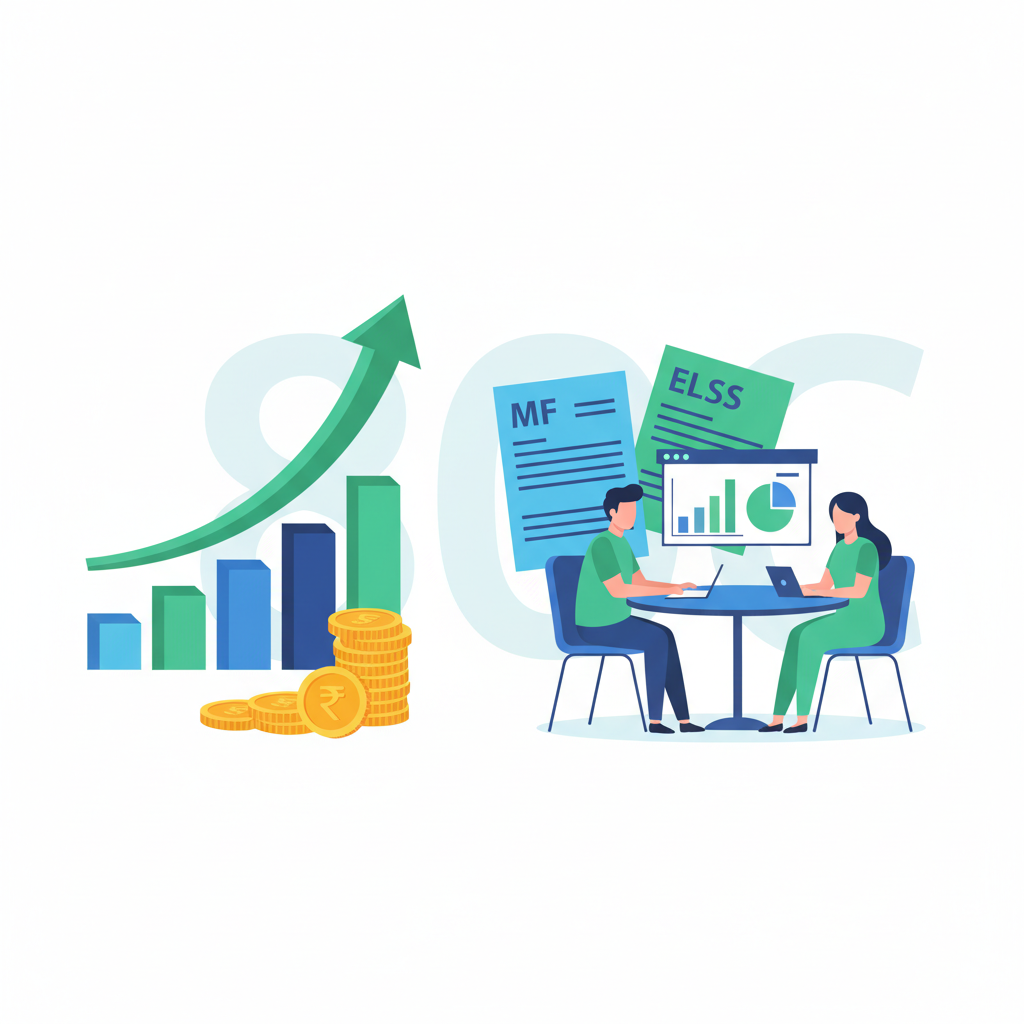
Ever feel that familiar dread creep up around January or February? That sudden panic when you realise the tax-saving deadline is looming, and you're scrambling to find something, anything, to save on your Section 80C deductions? You’re not alone. I’ve seen this movie play out for countless salaried professionals over my 8+ years advising on mutual funds in India. People like Rahul, a software engineer in Bengaluru earning ₹1.2 lakh a month, who always waits till the last minute, only to end up dumping a lump sum into some instrument without much thought.
But what if I told you there’s a smarter way? A way to not just save tax, but actually build wealth? And it starts with a simple, yet powerful tool: an ELSS Tax Saving Calculator. This isn't about magical shortcuts, but about smart, proactive planning that can genuinely change your financial trajectory.
Stop the Last-Minute Rush: ELSS as Your Wealth-Building Ally
Look, when it comes to Section 80C, most of us default to the familiar: PPF, FDs, life insurance premiums. And there’s nothing inherently wrong with them. But honestly, most advisors won't tell you this directly – these traditional options, while safe, often barely beat inflation, let alone create substantial wealth. You’re essentially just treading water, financially speaking.
Enter ELSS, or Equity Linked Savings Schemes. These are diversified equity mutual funds that come with a triple advantage: tax savings under Section 80C (up to ₹1.5 lakh), potential for inflation-beating returns, and the shortest lock-in period among all 80C instruments – just 3 years. Compared to PPF's 15 years or a typical FD's 5 years, ELSS offers remarkable liquidity while still benefiting from equity market exposure. When I first started out, I saw my own colleague, Priya, switch from traditional fixed deposits to ELSS. Initially sceptical, she was amazed at how her portfolio grew over just a few years, far outperforming her previous investments.
Think about it: instead of just saving tax, you're investing in India’s growth story, the companies listed on the Nifty 50 and SENSEX. ELSS funds primarily invest in equities, offering you the chance to participate in the long-term capital appreciation that has historically rewarded patient investors. Of course, with equities, there's market risk, but over the long run, the potential upside is significant.
Decoding the Magic: How an ELSS Tax Saving Calculator Helps You Plan
Now, how do you make ELSS work for *you*? This is where the ELSS Tax Saving Calculator becomes your personal financial assistant. It’s not just about figuring out how much you need to invest to hit your ₹1.5 lakh 80C limit. It's about projecting the future wealth you could create.
Let's say Anita, a marketing manager in Pune earning ₹65,000/month, wants to save the full ₹1.5 lakh. Without a calculator, she might just divide it by 12 and think, 'Okay, ₹12,500 every month.' But a good calculator helps her do more:
- Project Future Value: You can input your monthly SIP amount, the expected annual return (remember, historical equity returns can range, but don't promise future results!), and the investment tenure (at least 3 years, but ideally longer for wealth creation). The calculator will show you an estimated corpus.
- Understand the Power of Compounding: Seeing that ₹12,500/month could potentially grow into a substantial sum over 5, 10, or 15 years is a powerful motivator.
- Optimise for Goals: Maybe you're saving for a down payment in 5 years or your child's education in 10. The calculator helps you reverse-engineer the SIP needed.
For instance, if Anita invests ₹12,500/month for 10 years, assuming a historical annualised return of, say, 12% (purely for illustration, past performance is not indicative of future results), an SIP calculator can show her a potential corpus of over ₹29 lakh! That’s a game-changer compared to just saving ₹1.5 lakh in tax.
Choosing Your ELSS: Beyond the Hype and the Headlines
With so many ELSS funds out there, how do you pick the right one? It’s easy to get swayed by the fund that topped the charts last year. But here’s what I’ve seen work for busy professionals like Vikram in Chennai:
- Consistency over Flashiness: Look for funds that have delivered consistent, above-average returns over 3, 5, and 10 years, not just a one-off stellar year.
- Fund Manager & House Reputation: A seasoned fund manager with a clear investment philosophy is crucial. Also, a reputable Asset Management Company (AMC) with robust research capabilities, compliant with SEBI regulations, provides an added layer of trust.
- Expense Ratio: This is the annual fee charged by the fund house. While you shouldn’t pick a fund *solely* based on the lowest expense ratio, a very high one can eat into your returns over the long term. Direct plans generally have lower expense ratios than regular plans.
- Diversification: Most ELSS funds are flexi-cap in nature, meaning they can invest across large, mid, and small-cap stocks. This diversification helps manage risk.
Don't just chase returns; understand the fund's underlying strategy. Check out what AMFI has to say about investor education, it's always a good starting point.
The Power of SIPs: Your Secret Weapon for ELSS Investing
We talked about Rahul's last-minute scramble. The antidote? A Systematic Investment Plan (SIP). Instead of trying to time the market (which, let's be honest, even the pros struggle with), a SIP allows you to invest a fixed amount regularly. Here's why it's so brilliant for ELSS:
- Rupee Cost Averaging: When markets are down, your fixed SIP amount buys more units. When markets are up, it buys fewer. Over time, this averages out your purchase cost, reducing risk and potentially enhancing returns.
- Discipline: A SIP instills financial discipline. Once you set it up (say, ₹12,500/month for your ₹1.5 lakh 80C limit), it happens automatically, taking away the stress of remembering to invest.
- Early Start Advantage: The earlier you start, the more time your money has to compound. Even a small SIP started early can build a significant corpus.
Think about it: instead of a single, anxiety-inducing lump sum, you spread your investment, smooth out market volatility, and build wealth consistently. That's financial zen right there!
What Most People Get Wrong with ELSS
Even with the best intentions, people often make a few key mistakes that undermine their ELSS investments:
- The March Rush Mentality: This is the biggest offender. Investing a lump sum in March means you’re subjecting your entire investment to the market whims of that specific month. You lose out on rupee cost averaging and the potential for smoother returns that SIPs offer.
- Chasing Last Year's Topper: Just because a fund did exceptionally well last year doesn't mean it will repeat the performance. Past performance is not indicative of future results. Focus on consistency, fund manager quality, and your own risk appetite.
- Ignoring the 3-Year Lock-in: While it’s the shortest among 80C options, 3 years is still 3 years. Don't invest money you might need urgently within that period. Understand that you cannot redeem your units before this lock-in ends.
- Treating it as *Just* a Tax Saver: Many redeem their ELSS units immediately after the 3-year lock-in without a clear financial goal. ELSS offers wealth creation potential; let it grow for longer horizons if it aligns with your goals.
- Not Using a Calculator Proactively: Relying on mental math or guesswork means you’re missing out on understanding the real impact of your investments and how to optimise them for your tax savings *and* wealth goals.
My advice? Use the ELSS Tax Saving Calculator at the start of the financial year, not at the end. Plan your SIPs, understand the potential returns, and invest with a clear head.
So, ready to move beyond the tax-saving panic and actually start building wealth? It’s simpler than you think. Start by exploring how much you need to invest to meet your 80C target and what that could potentially turn into. A smart tool like an ELSS Tax Saving Calculator is your first step towards becoming a more proactive, confident investor.
Why not give it a try right now? Head over to a good SIP calculator and plug in some numbers. See the potential for yourself. Your future self will thank you for taking action today.
This blog post is for educational and informational purposes only. This is not financial advice or a recommendation to buy or sell any specific mutual fund scheme. Mutual Fund investments are subject to market risks, read all scheme related documents carefully.